
The Kielce Micizgód Project
Project Objectives
Planned completion date: 2029
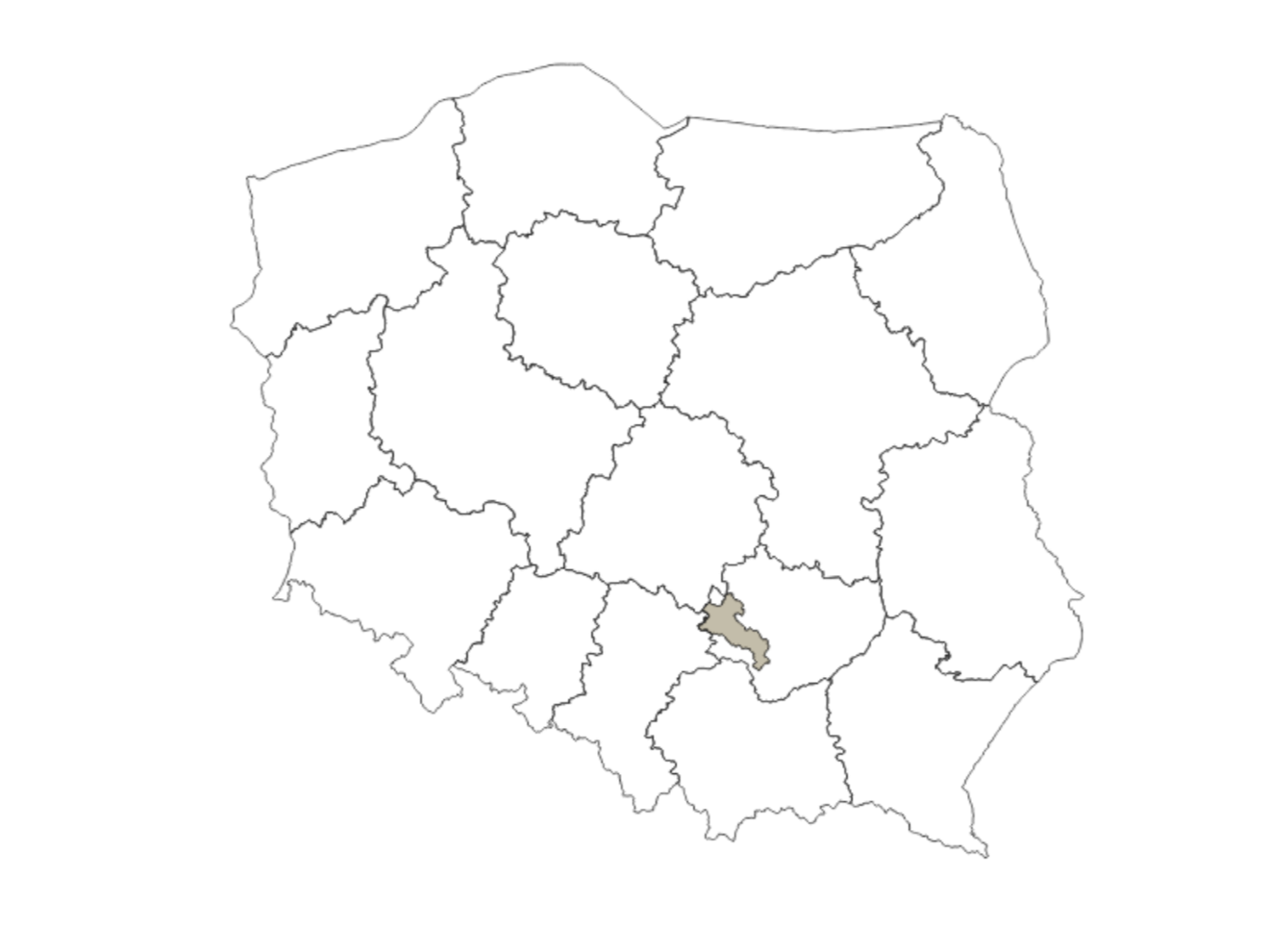
Installation renewable energy sources planned within the municipality.
Planned investment
Features:
Average wind speed: 7.5–7.6 m/s
Distance from buildings: at least 700 meters
Environmental studies conducted: partial
What exactly will be built?
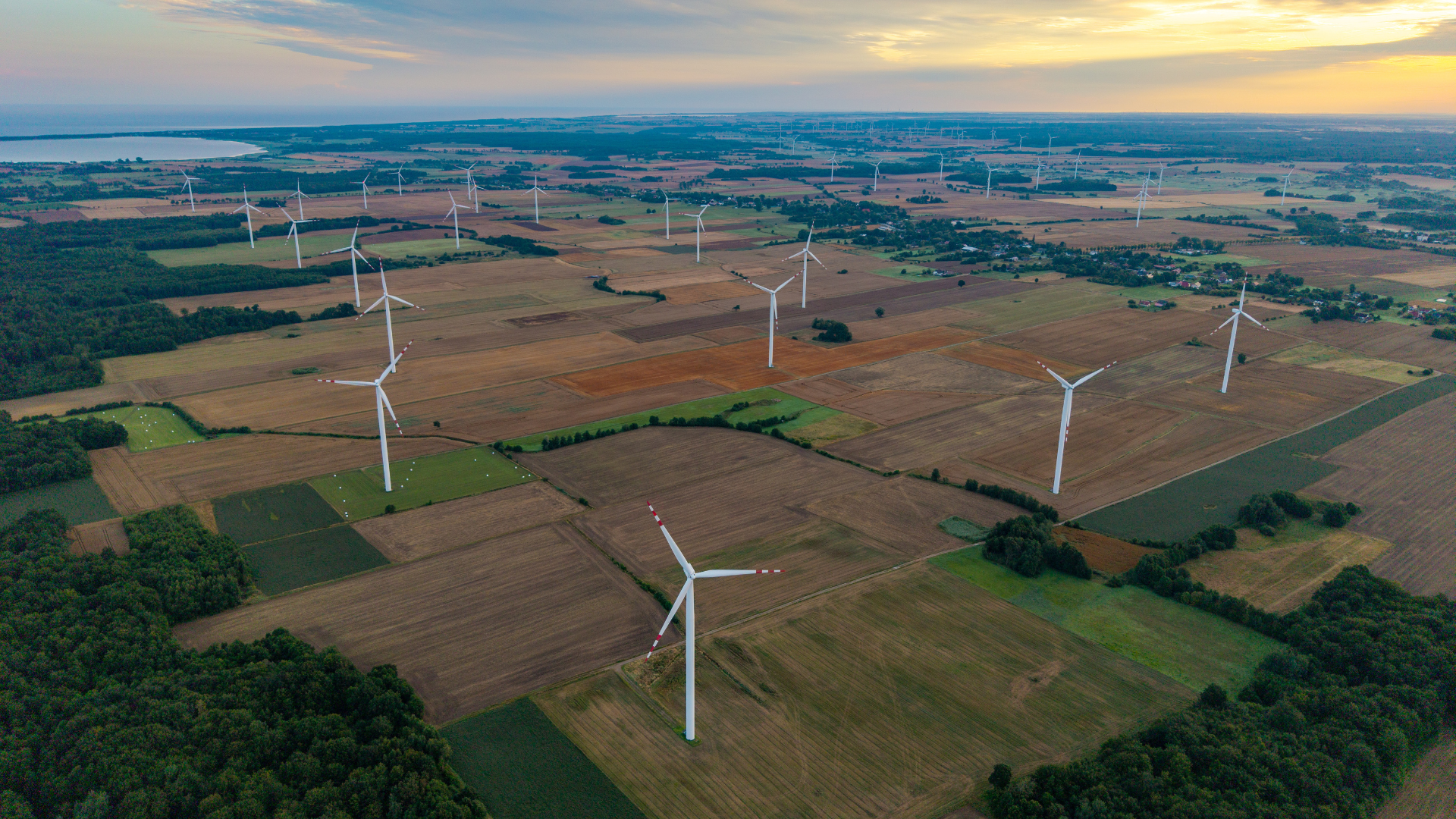
Modern wind turbines
Total capacity: 6.8 MW
Height: 266.5 m (to the tip of the blade)
Most of the land is still used for agricultural purposes.

Who is responsible for the project?
Daniel Nowak
Regional Manager for Renewable Energy
What does the investment bring to the community and its residents?
Our goal is not just to build a wind farm. It’s also about providing tangible support
to the municipality and the local community!
Municipality:
additional revenue for the budget, which can be allocated to roads, schools, and infrastructure
the ability to undertake new investments thanks to stable income
Community:
support for local initiatives
and institutionseducational and community initiatives carried out in collaboration
with residents
Residents:
the involvement of local businesses
and employees in the implementation of the projectnew opportunities for economic cooperation
Environment:
production of clean energy without emissions
implementation of the project in accordance with strict environmental standards
Our Commitments to Residents
We will keep you informed at every stage of the project
We answer residents' questions and address their concerns
We engage in dialogue with the local community
We respond to feedback and issues reported to us
We are carrying out the project in accordance with applicable standards and regulations
We are actively involved in the development of local communities. To carry out these activities even more effectively on a larger scale, we have launched a nationwide social program MOCby nature.
In everything we do—at every stage of our work—our focus is always on PEOPLE!
Questions and Transparency
Do you have any questions?
Contact us directly or check out our FAQ.
-
The siting of wind turbines is always preceded by a thorough acoustic analysis conducted in accordance with national standards.
Sound propagation depends on the specific characteristics of the terrain (e.g., topography, clusters of trees), and the height of the turbines directly affects the reduction in sound intensity.
According to Polish law and years of research, 40 dB at night and 45 dB during the day are considered safe sound levels for people in residential buildings.
The standards in force in Poland are among the more stringent in Europe and the world, e.g. in the Netherlands 47 dB (at night and during the day) in Norway 45 dB (at night and during the day), in the US depending on the state 45-55 dB at night and 50-55 dB during the day.
The sound emitted by the operating turbines, which reaches the nearest households located in their vicinity, is comparable to the so-called "murmurs" found in any home. Sounds of this intensity are no louder than those emitted, for example, by a standard modern refrigerator. The greater the distance of the turbine from the ground, the lower the intensity of the sound reaching the surface.Note that the specified standards apply to sound intensity measured outside the building. Sound reaching the premises, due to the insulating properties of the building structures, will be practically inaudible.
-
Infrasound is a type of sound waves inaudible to humans. They occur commonly in the environment. They are generated both during natural processes, e.g. waves on the sea, and artificial processes, e.g. the operation of a car engine.
Infrasound generated by wind turbines is at a comparable level to that commonly generated in the environment.
No harmful effects of infrasound generated by wind turbines on human health or the surrounding environment have been found. -
The shadow flicker effect is the repeated slow movement of the shadow across the terrain, a similar effect is produced by the shadow cast by small clouds on sunny days.
The location of the turbines in accordance with accepted standards limits the occurrence of the flicker effect to a few tens of hours per year, i.e. no more than 30 minutes per day (usually a few minutes at most). It occurs during short periods of the day, i.e. in the morning and afternoon, and is noticeable mainly in winter, when the sun rises lowest in relation to the horizon.The number of days with full sunlight in winter is much lower compared to other seasons.
However, in some cases, it is possible to temporarily turn off or slow down the turbine to completely eliminate the shadow flicker phenomenon.
The shadow flicker produced by wind turbines has no effect on humans or animals. The flicker effect is mistakenly referred to as a stroboscopic effect. Note that modern turbines are slow-speed devices that move at a maximum speed of 20 revolutions per minute. In order to achieve the stroboscopic effect, turbines would have to move at 2.5 times that speed. -
In Poland, conditions conducive to the formation of ice on turbine blades are an extremely rare phenomenon, occurring on average 1 day a year.
According to studies and observations, pieces of ice detached from the blade are small in size and fall in the light of rotation of the turbine blades, and therefore do not pose a threat to buildings and residents.
The safety buffer of a minimum of 500 meters from buildings and infrastructure facilities left as a result of the design work effectively eliminates potential hazards due to the potential detachment of a piece of ice from the turbine.Due to the rarity of the occurrence, a common practice when blades become icy is to temporarily stop them until the resulting cover melts on its own.
-
All equipment that generates, transmits or consumes electricity, as a rule, generates an electromagnetic field.
The value of the electromagnetic field emitted by wind turbines, which is measured at the ground surface in the immediate vicinity of the turbine, has a value lower than the background found in the environment.
Electromagnetic fields are also generated during natural processes occurring in the environment, and are associated with radiation from the Earth, the Sun and the ionosphere. The intensity of the electric field generated by cell phones, is up to 0.009 kV/m, and this is the same as the electric field that reaches the ground surface from the nacelle of a wind turbine. -
The impact of wind turbines on plants and fungi occurs only at the stage of construction of the wind park, is spotty, short-lived, and limited to the immediate location of the turbines and construction facilities.
The impact of wind turbines on wildlife is also incidental, noticeable only during construction. Once the windmills are in operation, animals return to graze in their vicinity. There is also no scientific evidence of negative effects of wind turbines on livestock Animals living in the vicinity of wind turbines develop properly, and their behavior remains unchanged.
When it comes to the impact on birds, we minimize it as early as the design phase. This work is based , among other things, on environmental data provided by the Regional Directorates for Environmental Protection; therefore, each turbine is located with current data in mind. The information obtained pertains to , among other things, refuge zones, breeding sites, regular habitats, and bird migration routes, based on which safety buffers are established around the protected zones.
Every single investment under way is preceded by annual ornithological monitoring in order to obtain the most accurate information about local conditions, with the aim of minimizing environmental impact.Statistically, wind turbines are responsible for only 0.01% of bird deaths. The most significant factor affecting their mortality is collisions with buildings and glazing mounted on them (59%), followed by deaths from collisions with power lines (14%), cat predation (10%), collision with cars (8%), and the effects of pesticides (7%).
-
No, the wind turbines will not be located near homes, as their placement complies with current regulations regarding minimum distances from residential buildings.
-
In addition to revenue for the municipal budget, the local community may receive funding from the investor to organize events and various local initiatives aimed at children, youth, and adults.
In some cases, partnership programs or additional initiatives for the local community may be available.
-
The facility will be dismantled, and the site will be restored to its original condition or repurposed. The dismantling plan is a formal component of the project as early as the investment planning stage.
-
Yes, we are carrying out the project in accordance with applicable regulations and planning documents. We operate with integrity and transparency.
-
The documentation is available at the municipal office and during public consultations.